

Indonesia and Timor-Leste strengthen public employment services through South-South cooperation
DILI, Timor-Leste – Employment officers from across Timor-Leste are putting new counselling skills into practice after a five-day programme that drew on Indonesia’s experience in delivering public employment services.

© Joao Noronha/ILO
Thirty-one officers from Timor-Leste’s Secretariat of State for Vocational Training and Employment (SEFOPE) took part in the training in Dili from 5–9 October 2026. Jointly organized by the International Labour Organization (ILO), Indonesia’s Ministry of Manpower and SEFOPE, the programme used South-South cooperation to exchange practical approaches to helping jobseekers to find work, training and entrepreneurship opportunities while responding more effectively to employers’ recruitment needs.
“Even in low demand context, employment services help jobseekers understand their options and make informed educational and career choices” said Diego Rei, ILO Employment and Labour Market Specialist.
Through this South-South cooperation, Indonesia and Timor-Leste are sharing practical experience to strengthen employment counselling and help officers respond to changing labour market demands, including those arising from the green transition.
Diego Rei, ILO Employment and Labour Market Specialist
Lucas Soares Pereira, Chief of the Employment Department of SEFOPE, encouraged participants to apply what they learned to improve services for young people and other jobseekers in their communities.
Strengthening the skills of our employment counsellors is essential to providing better support to young people and jobseekers across Timor-Leste. Learning from Indonesia’s experience gives us practical approaches that we can adapt to the needs of our communities.
Lucas Soares Pereira, Chief of the Employment Department of SEFOPE
The programme covered analytical and diagnostic interviewing, self-assessment and profiling, job-search techniques, digital tools and services to employers. Sessions also addressed mental well-being in counselling, entrepreneurship support and engagement with the private sector.
Senior Indonesian public employment service officers Indah Kurnia Lestari and Anak Agung Ayu Trisnawati shared approaches used in Indonesia to assess jobseekers’ needs, provide tailored guidance and build relationships with employers.
Sessions led by the ILO, World Health Organization (WHO), SEFOPE and the Institute for Business Development Support (IADE) complemented the exchange with expertise on occupational classifications, mental well-being, digital employment services, entrepreneurship and the green transition.

© Joao Noronha/ILO
A key emphasis was helping counsellors connect what they learned with the realities of their local labour markets: identifying the support individual jobseekers need, understanding employers’ recruitment requirements and guiding clients towards appropriate employment, training or business development opportunities.
Participants also explored the International Standard Classification of Occupations (ISCO) and the International Standard Industrial Classification (ISIC) as tools for understanding occupations, industries and skills requirements and for strengthening discussions with employers.
For Adriana Maria Candida Pereira, an employment officer from Atauro municipality, this practical application was particularly useful.
I now have a better understanding of how to identify the skills required for different occupations and discuss these needs with employers,” she said. “In Atauro, I want to use this knowledge and reach more young people so they can access employment services and explore their opportunities.
Maria Candida Pereira, Employment Officer from Atauro Municipality
Pereira plans to strengthen employer engagement and expand outreach to young people through job fairs, school visits and community awareness activities.
The programme also looked ahead to changes that could reshape Timor-Leste’s labour market. Participants discussed how the green transition and technological change could affect occupations and skills demand, including possible changes associated with transport and other sectors of the economy.
Rather than ending with the training itself, participants developed individual action plans setting out steps and performance indicators for applying what they had learned in their offices and municipalities. The plans are intended to provide a practical basis for improving services and monitoring progress.
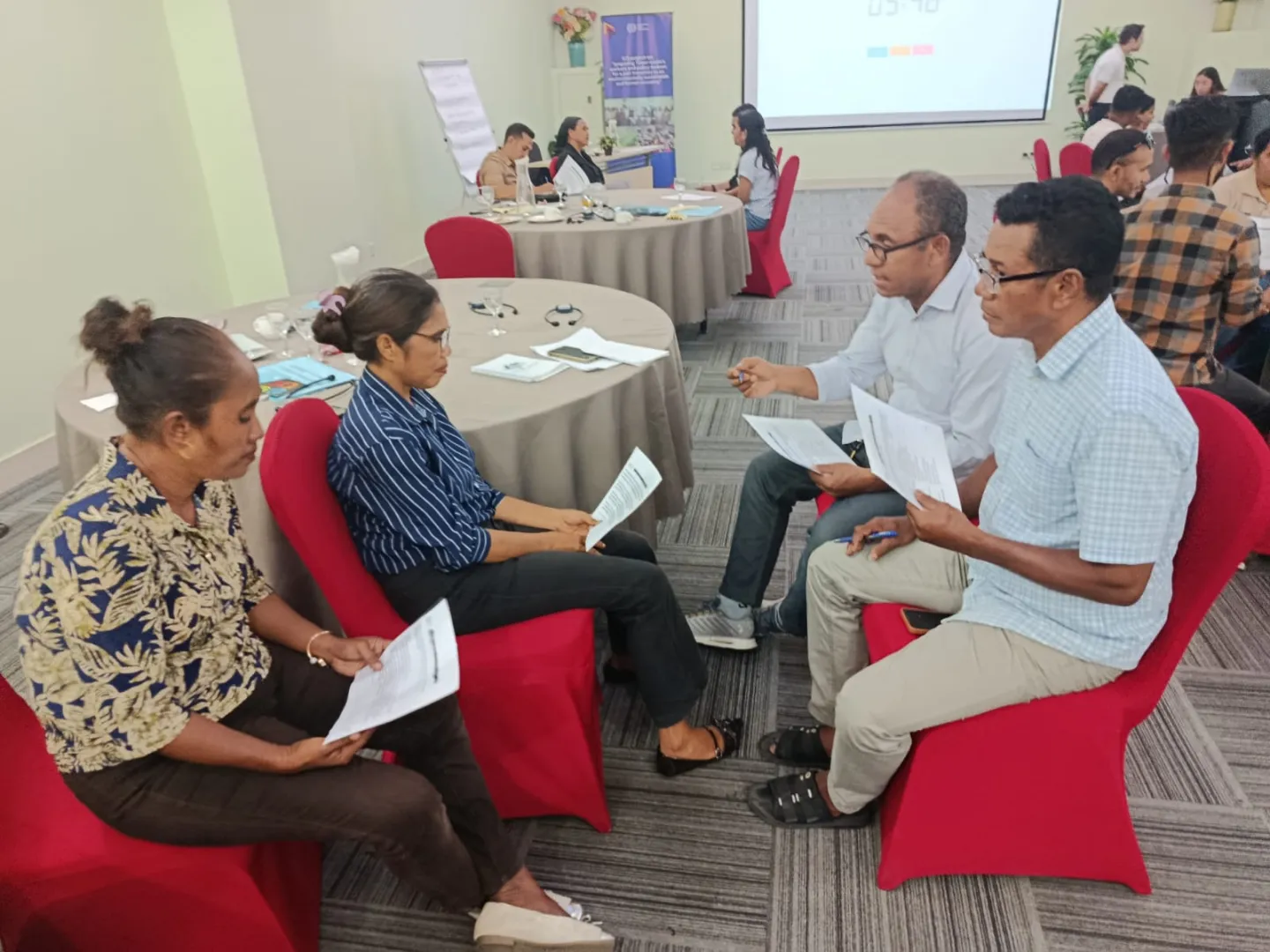
© Joao Noronha/ILO
The programme was funded through the ILO’s Regular Budget Supplementary Account (RBSA) project, “Preparing Timor-Leste’s workers and policy makers for just transition and the formal economy”. It supports the 2025–2028 implementation and monitoring plan of Timor-Leste’s National Employment Strategy 2017–2030, including its commitment to systematic capacity building for employment counsellors and career guidance services.
By combining Indonesia’s public employment service experience with locally developed action plans, the initiative aims to strengthen cooperation between the two countries while helping SEFOPE provide more responsive employment services to jobseekers and employers across Timor-Leste.
Legal Disclaimer:
EIN Presswire provides this news content "as is" without warranty of any kind. We do not accept any responsibility or liability for the accuracy, content, images, videos, licenses, completeness, legality, or reliability of the information contained in this article. If you have any complaints or copyright issues related to this article, kindly contact the author above.
